Welcome to CottonInfo - who we are, what we do, and how you can best stay up to date.
Read more about the full team here.


Welcome to CottonInfo - who we are, what we do, and how you can best stay up to date.
Read more about the full team here.
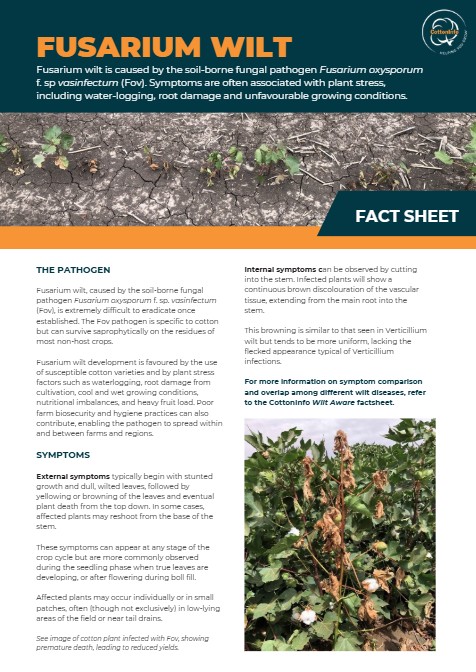
Fusarium wilt is caused by the soil-borne fungal pathogen Fusarium oxysporum f. sp vasinfectum (Fov). Symptoms are often associated with plant stress, including water-logging, root damage and unfavourable growing conditions.
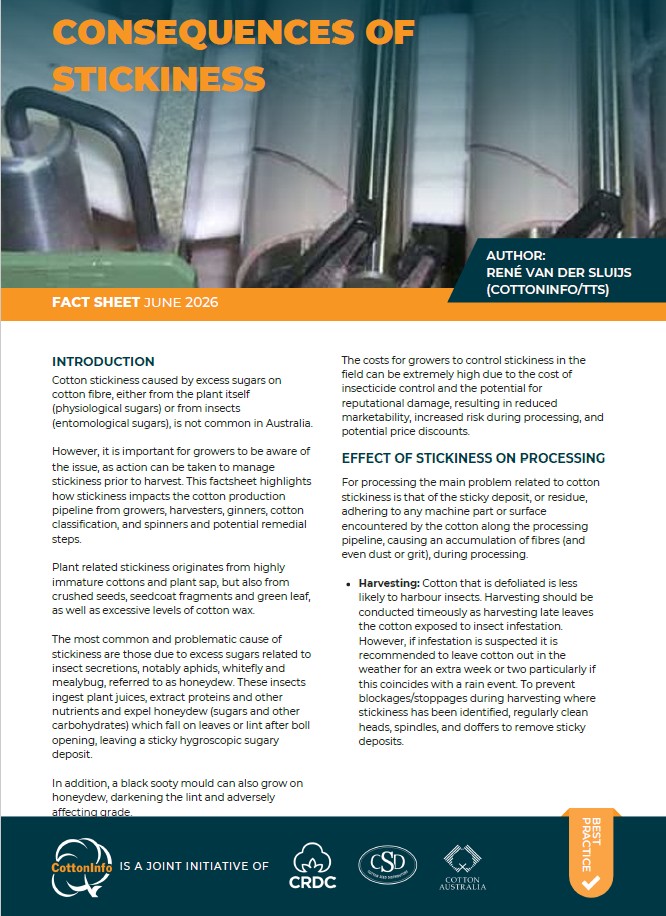
Cotton stickiness caused by excess sugars on cotton fibre, either from the plant itself (physiological sugars) or from insects (entomological sugars).
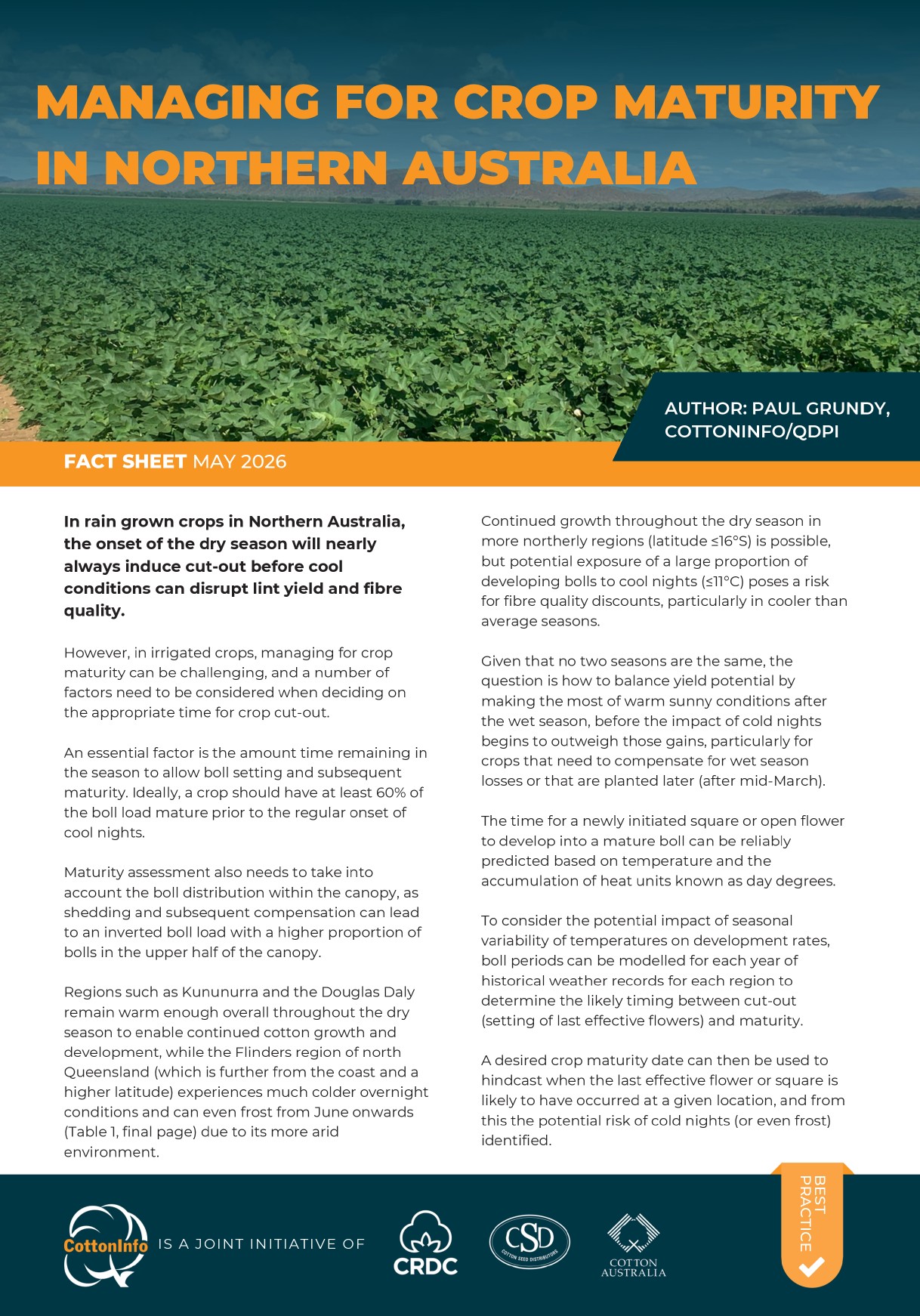
Managing crop maturity in Northern Australia's irrigated cotton involves timing cut-out to ensure at least 60% boll maturity before cool nights or frost risk, using historical temperature data and boll development models to balance yield potential and fibre quality, with region-specific guidance
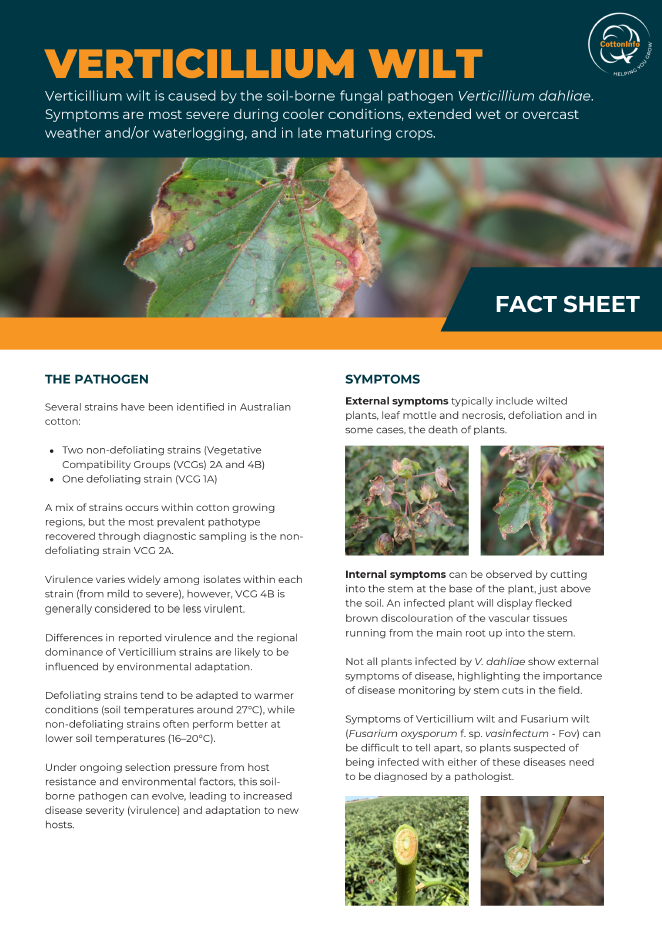
Verticillium wilt is a soil‑borne disease that can cause significant cotton yield losses, particularly under cool, wet conditions and in later‑maturing crops. It is widespread across NSW and parts of Queensland and can be difficult to diagnose in the field.
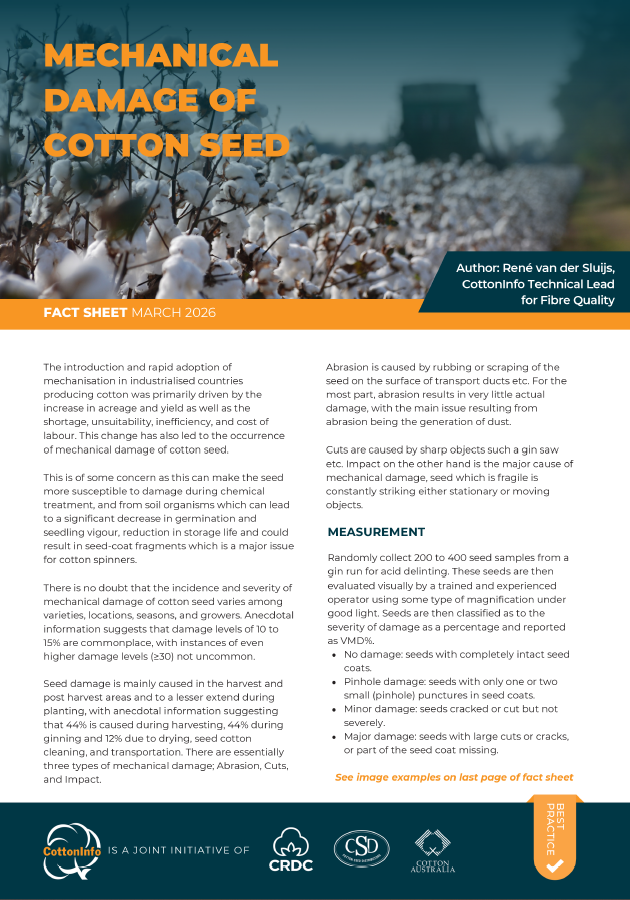
This fact sheet provides detailed information about the causes, types, and measurement of mechanical damage to cotton seeds.
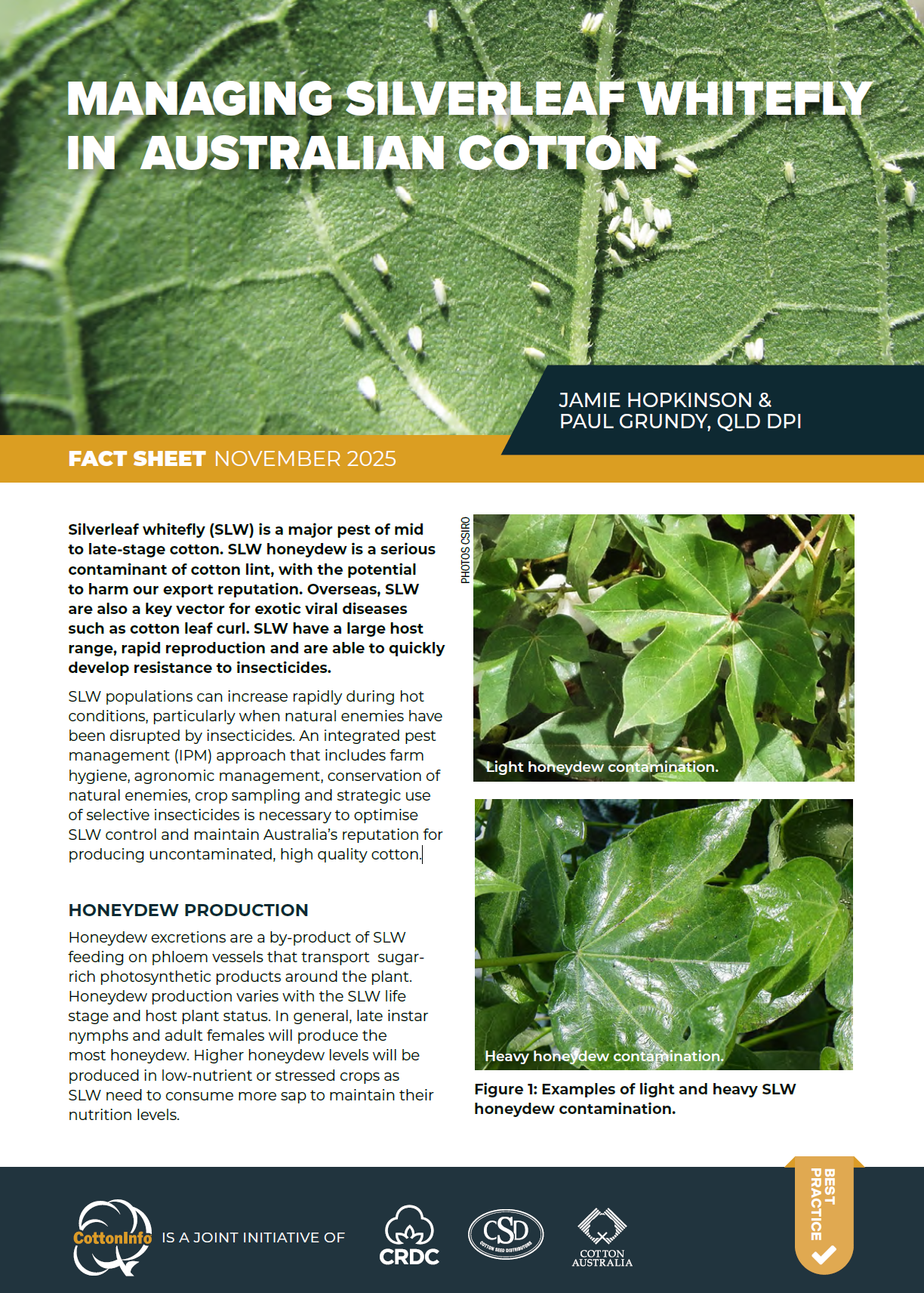
Silverleaf whitefly (SLW) is a major pest of mid to late-stage cotton. SLW honeydew is a serious contaminant of cotton lint, with the potential to harm our export reputation.
Phenoxy herbicides such as 2,4-D, MCPA and dicamba can cause damage to sensitive crops such as tomatoes, grapes and cotton. These crops are very sensitive to this group of herbicides and small amounts can result in significant yield loss.
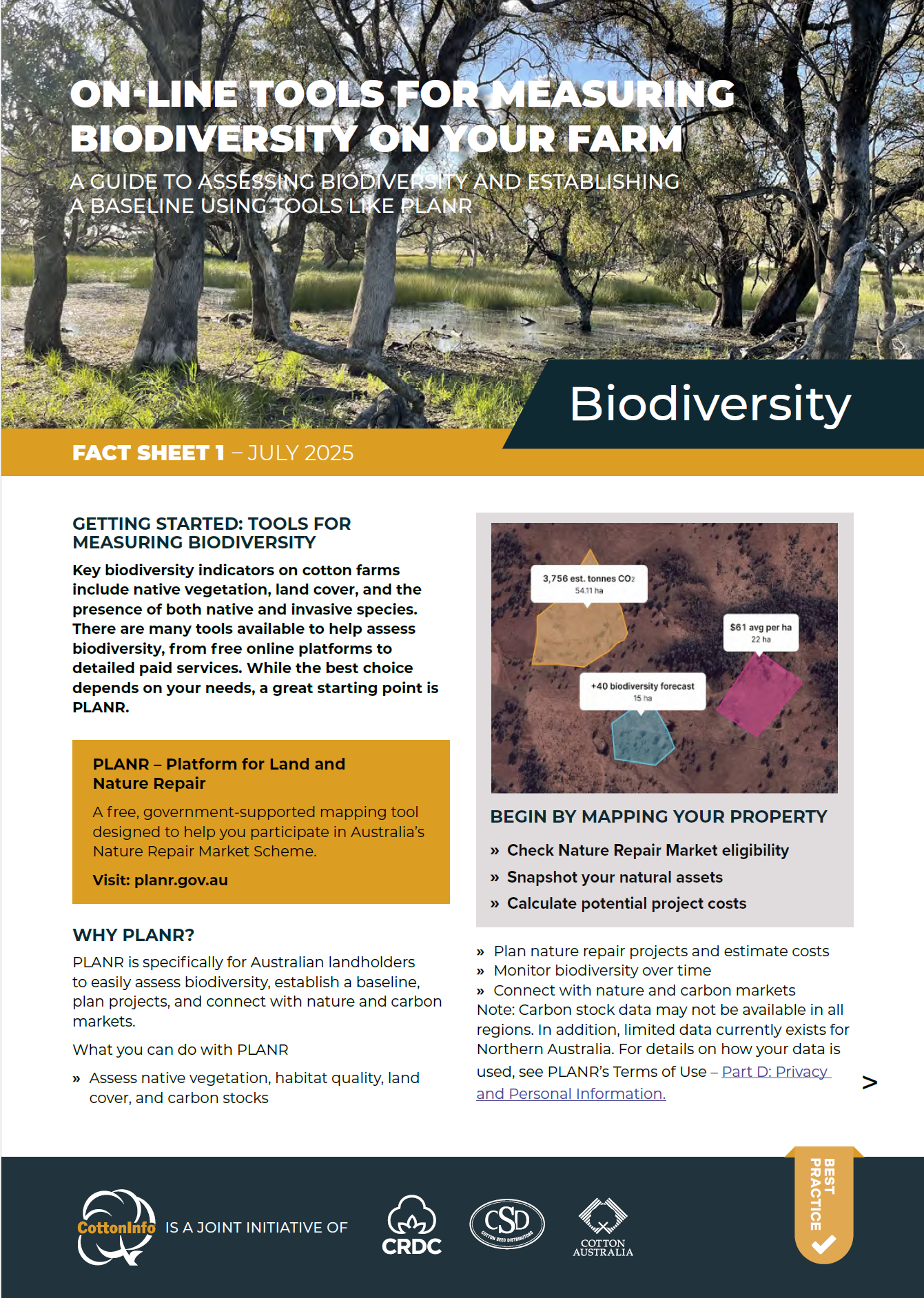
These biodiversity monitoring tool fact sheets aim to prepare growers for future sustainability and market demands and highlight the support available for growers seeking detaile

Clay soils in Australia largely underpin the cotton industry due to their excellent water-holding capabilities.

Climate is the most important factor impacting cotton growth and development and how the crop might be managed in northern Australia.

System capacity is the most important design criterion for centre pivot and lateral move (CPLM) systems. This fact sheet walks through the calculation of system capacity in centre pivot (CP) systems.