Access research, guides, and resources for cotton growers
Showing 1-10 of 14 results
Showing 1-10 of 14 results
12 November 2026
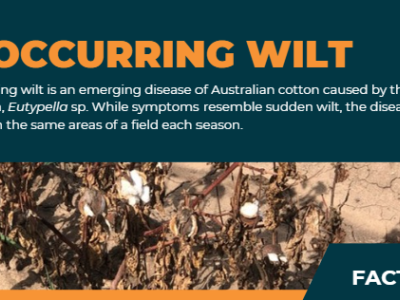
Reoccurring wilt is an emerging disease of Australian cotton caused by the fungal pathogen, Eutypella sp. While symptoms resemble sudden wilt, the disease can reoccur in the same areas of a field each season.
12 November 2026
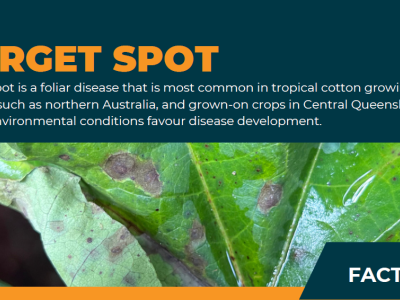
Target spot is a foliar disease that is most common in tropical cotton growing regions where environmental conditions favour disease development.
9 November 2026
Download the Disease Diagnostics Submission form for NT and WA.

9 November 2026
Download the Disease Diagnostics Submission form for QLD and NSW.

4 September 2026
Black root rot can be a significant problem in cooler growing regions. Affected crops may be slow growing or stunted early in the season which can delay in the onset of flowering.

1 July 2026
The CottonInfo Annual Operational Plan 2026-27 (AOP) is a companion document to the CottonInfo Strategic Plan 2025-28. It covers the period July 2026 to June 2027.

24 June 2026
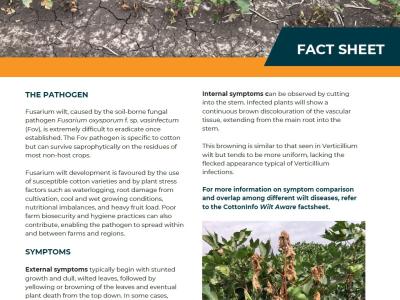
Fusarium wilt is caused by the soil-borne fungal pathogen Fusarium oxysporum f. sp vasinfectum (Fov). Symptoms are often associated with plant stress, including water-logging, root damage and unfavourable growing conditions.
22 June 2026
The Winter 2026 edition of Spotlight focuses on how Australia’s cotton industry is managing risk on farm and building the capability to deal with the challenges and opportunities ahead.

22 June 2026
The Australian Cotton Production Manual is published by CRDC and CottonInfo and is updated to incorporate the latest research and consistent improvements in industry best practice.

30 April 2026
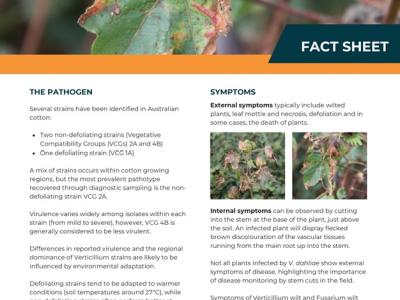
Verticillium wilt is a soil‑borne disease that can cause significant cotton yield losses, particularly under cool, wet conditions and in later‑maturing crops. It is widespread across NSW and parts of Queensland and can be difficult to diagnose in the field.