
Access research, guides, and resources for cotton growers
Showing 1-10 of 70 results
Showing 1-10 of 70 results
11 September 2026
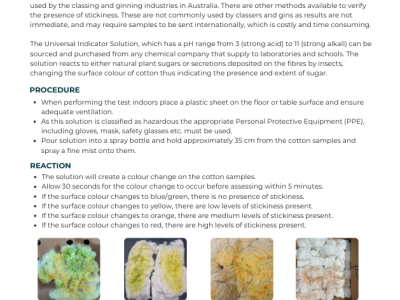
Checking for cotton stickiness made simple.
9 September 2026
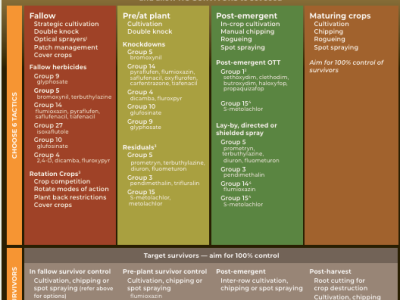
Supporting informed weed management decisions that protect herbicide effectiveness for the long term.
9 September 2026
The cotton industry Insecticide Resistance Management Strategy (IRMS) seeks to manage the risk of resistance in all major pests of cotton.

4 September 2026
Black root rot can be a significant problem in cooler growing regions. Affected crops may be slow growing or stunted early in the season which can delay in the onset of flowering.

26 June 2026
Siphonless irrigation systems have evolved as cotton growers adapt irrigation designs, layouts and management to improve productivity and resource efficiency.

26 June 2026
Smart irrigation technologies are increasingly being adopted by cotton growers for labour and water efficiency gains and lifestyle benefits.

24 June 2026
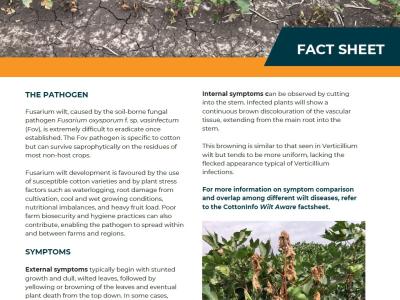
Fusarium wilt is caused by the soil-borne fungal pathogen Fusarium oxysporum f. sp vasinfectum (Fov). Symptoms are often associated with plant stress, including water-logging, root damage and unfavourable growing conditions.
23 June 2026
Cotton stickiness caused by excess sugars on cotton fibre, either from the plant itself (physiological sugars) or from insects (entomological sugars).

25 May 2026
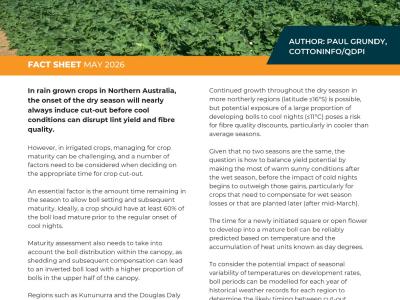
This fact sheet includes a table to assist growers and consultants in Northern Australia to select a desired crop maturity date and then manage for cut-out accordingly.
30 April 2026
Verticillium wilt is a soil‑borne disease that can cause significant cotton yield losses, particularly under cool, wet conditions and in later‑maturing crops. It is widespread across NSW and parts of Queensland and can be difficult to diagnose in the field.
